Blog - The Hidden Legal Job Market: Referrals, Lateral Hiring & Confidential Search

The legal hiring market is hiding something from you…
It’s job openings.
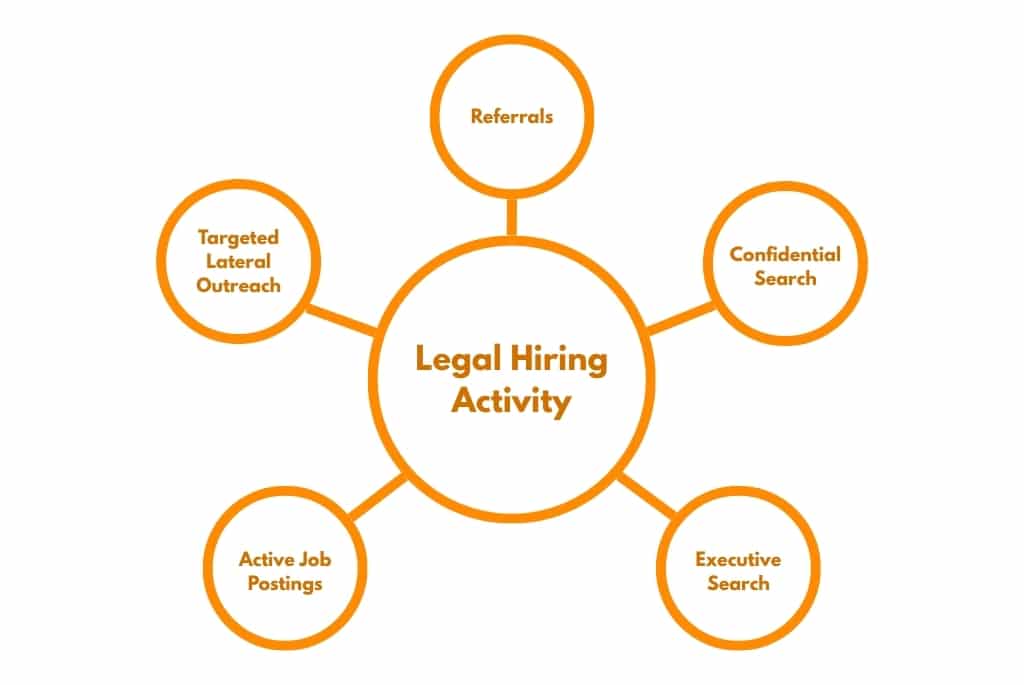
In the United States, a noticeable share of experienced legal hiring runs through referrals, targeted lateral outreach, executive search, and confidential search. Those roles rarely become public listings, especially when the employer cares more about precision and discretion than reach.
Legal employers don’t do this to create some secret special opportunity; they do it regularly to manage risk, reputation and competition.
The Visible Market and the Hiring Market Are Not the Same
People find jobs through multiple channels, not one.
Referral hiring continues to outperform other channels. According to SHRM’s reporting on recruiter survey data, employee referrals remain the top source of hires, accounting for more hires than job boards, career sites, or social media. Referrals also convert at significantly higher rates than cold applicants.
That’s just broad labor-market data (not legal specific) but it supports an important baseline fact: many hires originate outside public postings.
The legal industry widens this gap because legal hiring relies on signals that public postings don’t capture well: Judgment, writing quality, client handling, discretion, conflict awareness. Those traits aren’t easy to evaluate through a resume and a couple of quick interviews. A few good words from a trusted source are often needed to get the ball rolling.
Referrals Reduce Uncertainty and Legal Hiring Runs on Trust
Referral hiring performs well across industries. Research highlighted by MyPerfectResume’s Networking Nation report notes that a substantial share of jobs are filled through networking and referrals, underscoring how personal connections continue to drive hiring outcomes beyond their proportion of total applicants.
A 2026 analysis of employee referral data shows that referred candidates have ~28.2% apply-to-hire conversion, compared with typical 2-5% hire rates from job boards or general external sources.
In ZipDo’s research on referral program training, they found that referral hires are 50% more likely to meet or exceed performance expectations in their first year and have a 25-30% lower turnover rate in their first 12 months compared to external hires.
Legal employers care about turnover costs more than most industries. A bad hire isn’t only a productivity issue. It can become a client-service, reputation, or conflict issue.
Referrals don’t guarantee quality. They reduce the odds of surprises. In legal hiring, that’s a powerful value proposition.
Lateral Hiring Is Often a Targeted Shopping Process
Entry-level legal hiring is visible because it’s structured. Candidates move through standardized steps and predictable cycles.
Experienced hiring is often closer to targeted acquisition. Lateral recruiting is one of the fastest ways for a firm to add specialized expertise, strengthen a practice, or fill a specific capability gap. In addition, lateral hires often bring client relationships and industry connections that can immediately expand what the firm can credibly sell.
This doesn’t mean firms never post lateral roles.
But a lot of lateral hiring starts with a shortlist, not a job posting. The firm already knows what it needs (a niche skill set, a market, a client type) and uses that target profile to identify where that expertise lives and who’s most likely to move.
Here’s how the pattern typically plays out: a firm wants a stronger privacy bench. The first step is mapping which firms and teams are doing the most credible privacy work, then approaching specific laterals who can bring that capability (and ideally relationships) over the line.
With this approach, there’s no need for a job posting to ever go out.
What A Confidential Search Looks Like
A confidential search is a discreet hiring process, usually run through a retained executive search partner, where the employer does not publicly advertise the role.
A confidential search usually includes:
- An intake that defines the must-have experience and deal or matter profile
- A target list of firms, companies, and candidate backgrounds
- Quiet outreach to a small set of candidates
- Screening conversations that test fit and motivation without broadcasting the search
- A short list presented to the employer
- Interviews and reference checks handled with tight messaging and limited exposure
Employers use confidential searches when public visibility creates a downside.
That downside can be practical and immediate:
- The employer is replacing someone who still holds the seat
- The role touches sensitive clients or matters
- The employer doesn’t want competitors to know it’s building a capability
- The employer wants to avoid a flood of unqualified applicants
As our sister company WorkRocket explains, confidential job postings allow employers to fill open positions without publicly signaling instability or internal change. Companies use discretion to protect sensitive business information, avoid internal disruption, and maintain negotiating leverage during leadership transitions. The same logic applies even more strongly to senior roles, where visibility and reputation carry real consequences.
For executives, confidentiality matters just as much. Publicly applying for a role can jeopardize their standing with their current employer. A discreet process allows them to explore opportunities without risking credibility or position.
Legal departments and law firms operate under similar reputational constraints. Discretion isn’t a preference. It’s often the safest operating mode.
Why Job Boards Get Less Useful as Seniority Increases
Job boards shine when the employer wants to expand their reach.
As roles become more senior, the upside drops and the downside rises.
At senior levels, a public posting can:
- Trigger internal disruption
- Raise client questions
- Invite competitor interference
- Produce more volume with poor quality candidates
At the same time, senior roles often have narrow requirements. A General Counsel hire isn’t a generic counsel hire. A practice leader hire isn’t a generic partner hire. Precision matters more than applicant count.
Referral and benchmark data show why employers keep leaning on private channels when stakes are high. Referrals convert better than job board applicants in many datasets, and retained search exists to reduce mismatch risk for senior hires.
What Changes Are Keeping Roles Off of Job Boards
Two forces are quietly shaping how legal employers hire.
First, firms are managing growth with tighter profitability expectations at the practice level. When leaders measure performance by practice economics, they hire for specific specs. Specific specs favor targeted lateral outreach and confidential search over broad job board searches.
Second, remote and hybrid work expanded the candidate map. Employers can now search across markets without advertising expansion in a particular city. That flexibility increases the value of discreet outreach and recruiter-led targeting.
Both trends push the same direction: more curated searches, fewer broad public funnels for experienced roles.
What Legal Job Seekers Can Do with This Information
Submitting applications isn’t wrong. Treating applications as your whole strategy is the problem.
A practical approach focuses on being findable in the channels employers already use:
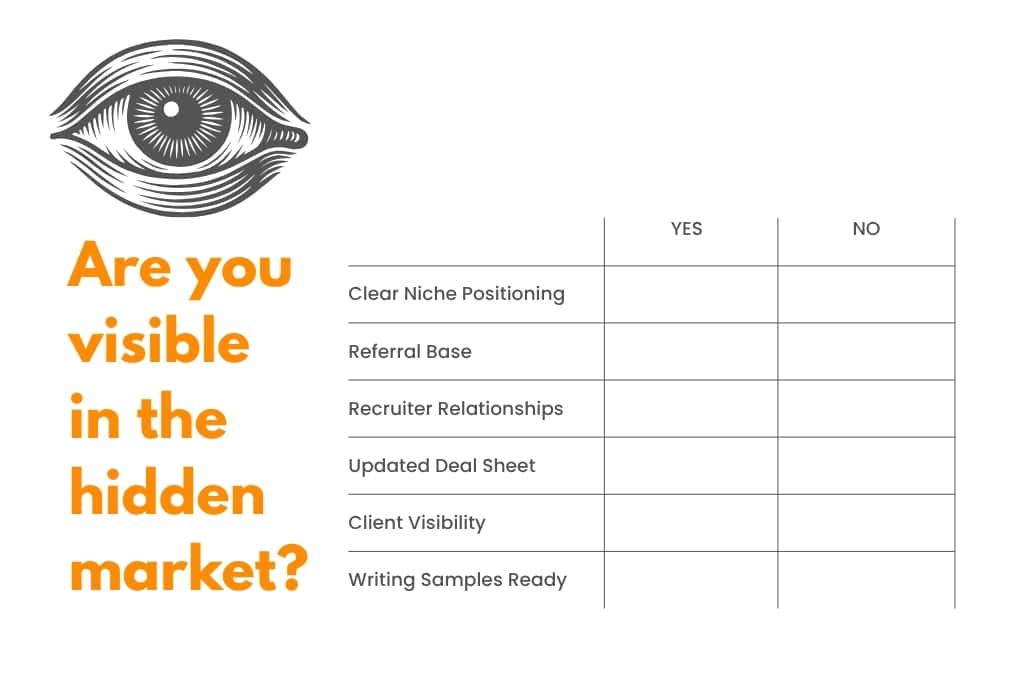
- Build a small referral base that matches the work. Two or three credible contacts in the same niche beats fifty random connections.
- Stay clear about positioning. Employers and recruiters should understand the work you do in one sentence, not three paragraphs. Have your elevator pitch ready.
- Keep materials ready. Deal sheets, writing samples, and matter lists speed up confidential processes that move fast to begin with.
- Have recruiter conversations before urgency hits. Confidential searches often start with outreach, not inbound applicants. Being known early increases the chance of being called.
Prime Legal works in legal hiring and often works with these confidential and lateral hiring processes. Our legal recruiters are some of the first people to know about these roles when they present themselves. For job seekers, working with a legal recruiter like Prime Legal can give you a major advantage: earlier visibility.
Final Takeaway
Legal job boards show a real but small portion of the market. Referrals, targeted lateral hiring, executive search, and confidential search account for another part, especially for experienced roles.
If you want access to more of the market, your approach has to match how legal hiring actually happens. Less spray-and-pray, more positioning and visibility in the channels that move first.
