Blog - The 5 Best Cities for Legal Jobs & Law Firm Hiring in 2026

Legal hiring in 2026 remains active, but it’s no longer evenly distributed. The strongest opportunities concentrate in a limited number of cities where regulatory complexity, litigation volume, corporate density, and population growth intersect.
For attorneys deciding where to build momentum, location increasingly determines access to certain types of work. Some markets reward specialization. Others reward flexibility and volume. Understanding those differences matters more than chasing national rankings.
The cities below stand out not because they are fashionable, but because hiring demand remains structurally supported.
Why Geography Still Shapes Legal Careers
Despite years of remote work expansion, legal employment remains concentrated in urban centers. Courts, regulators, and major clients operate locally. That reality keeps legal services clustered even as other professions disperse.
According to U.S. Bureau of Labor Statistics data, a small group of metropolitan areas accounts for a disproportionate share of attorney and paralegal employment.
In practice, this concentration creates sharper competition but also clearer specialization paths. Attorneys who understand how markets differ tend to make fewer lateral moves and progress faster once positioned correctly.
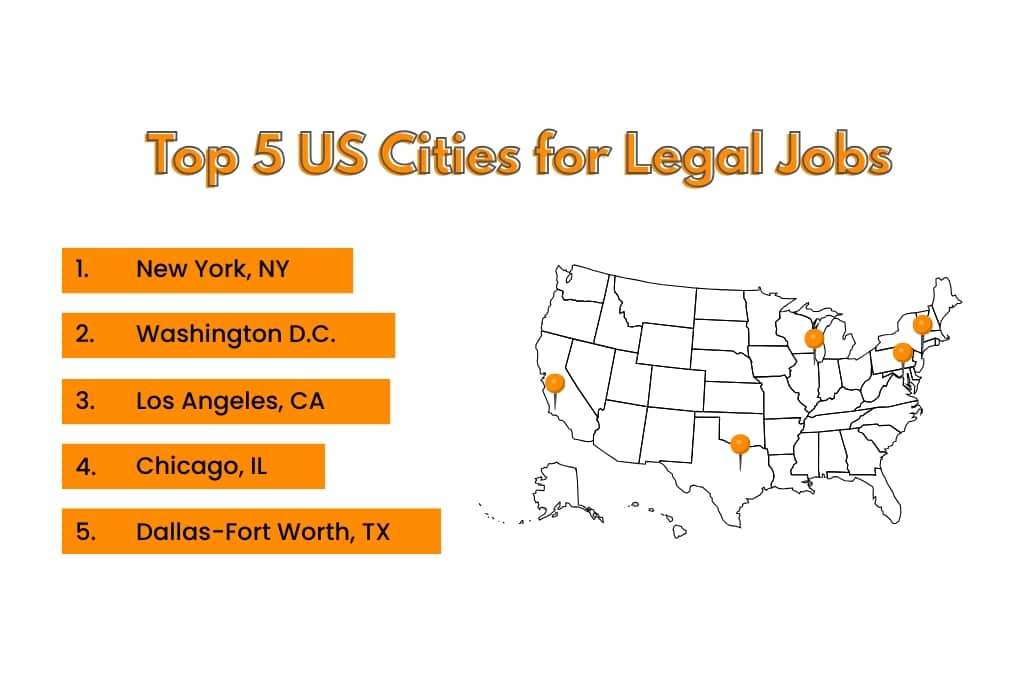
New York City
BLS occupational data consistently places New York at the top for legal employment.
The Largest Legal Market in the United States
New York City employs more lawyers than any other U.S. metro area, but raw volume understates its role in the legal market. The city concentrates high-stakes financial litigation, cross-border transactions, and regulatory enforcement that rarely migrate elsewhere.
Large firm hiring persists even during slower deal cycles because disputes, restructurings, and compliance work fill the gaps. Associates often gain exposure to complex matters earlier here than in other markets.
Living & Working Considerations
The tradeoff is cost. Compensation is high, but attrition is real. Many attorneys use New York as a launch market rather than a permanent base. Commuting patterns and billable expectations have more influence on day-to-day quality of life here than city amenities.
Washington, DC
Regulatory and Policy-Driven Legal Demand
Washington, DC operates differently from transaction-heavy markets. Hiring demand is driven by regulation rather than economic cycles. Federal agencies, contractors, and regulated industries create consistent need for legal expertise.
The region ranks among the highest in legal employment density relative to population.
Practice Areas with Sustained Growth
Administrative law, government contracts, healthcare regulation, privacy, antitrust, and public policy drive hiring here. These roles tend to reward subject-matter depth over billable volume, and many hiring managers screen heavily for domain experience.
Quality of Life Tradeoffs
Career paths in DC are often slower but steadier. Attorneys who establish credibility here tend to remain employable across administrations and policy shifts. Housing costs remain high, but work cycles are generally more predictable than in deal-driven markets.
Prime Legal frequently encounters candidates relocating to DC after transactional burnout elsewhere.
Los Angeles
California employs more lawyers than any other state, with Los Angeles accounting for a significant share.
Litigation Volume and Industry Diversity
Los Angeles supports one of the largest litigation markets in the country. State-specific labor laws, environmental regulation, and class action exposure sustain demand even when national hiring softens.
Firms and Employers Driving Hiring
In-house demand comes from media, technology, healthcare, and consumer brands that face steady employment and regulatory exposure.
Lifestyle and Market Realities
Lifestyle varies sharply by neighborhood, and commute tolerance often determines job satisfaction as much as compensation. Market fit matters too. Practices like entertainment, labor, and environmental law often reward local relationships and California-specific experience.
Chicago
A Balanced Legal Market with Broad Access
Illinois remains a top state for legal employment, driven largely by Chicago.
Chicago offers one of the most balanced legal markets in the U.S. It supports sophisticated corporate and litigation work without the volatility or cost pressure seen in coastal hubs.
Employers and Practice Strength
Chicago hosts legal departments for major manufacturers, financial institutions, and healthcare systems, creating steady in-house and hybrid advisory demand.
Cost and Career Considerations
Living costs remain more manageable relative to New York or California. Lateral mobility exists, but tenure tends to be longer than in New York or Los Angeles, which affects compensation leverage and promotion pacing.
Dallas–Fort Worth
One Of the Fastest-Growing Legal Markets
Texas has posted consistent legal employment growth over the past decade.
Dallas–Fort Worth continues to expand as companies relocate operations to Texas. That growth feeds demand for corporate, real estate, employment, and compliance attorneys.
Firms and Corporate Legal Teams Hiring
National firms are expanding their Texas presence, while regional firms grow alongside energy, logistics, and technology companies. In-house hiring plays a larger role here than in many markets, and legal teams often want attorneys who can partner closely with business leadership.
Living Advantages
Lower living costs and no state income tax improve net compensation, even when salaries trail coastal markets. The market rewards practicality. Attorneys who can translate legal risk into operational decisions tend to advance quickly.

What These Markets Reveal About Legal Hiring
A consistent pattern emerges. Regulatory and litigation-driven markets offer steadier demand. Transactional hubs offer higher upside but greater volatility.
Another overlooked factor is mobility. Attorneys in New York and Los Angeles tend to move firms more frequently. Chicago and Dallas show longer tenure, which affects promotion timelines and compensation leverage.
Understanding these dynamics helps job seekers avoid moves that look attractive on paper but stall progress in practice.
Choosing Among Cities for Legal Jobs In 2026
Cities for legal jobs are not interchangeable. Each market rewards different traits, risk tolerances, and career strategies.
Attorneys who treat geography as a strategic variable rather than a backdrop tend to make fewer corrective moves later. For firms and candidates alike, location remains one of the most consequential hiring decisions.
