Blog - How Gen Z Lawyers Are Changing the Law Firm Workplace

Shaped by tradition, hierarchy, and well-established expectations, the legal industry has always evolved slowly. But over the last few years, one generational shift has begun reshaping the law firm workplace faster than many leaders anticipated.
Gen Z lawyers, now filling entry-level associate roles, are pushing for new norms around salary expectations, workplace flexibility, and career mobility. For firms like Prime Legal in Richmond, VA, understanding these trends isn’t optional; it’s essential for attracting and retaining the next wave of legal talent.
A New Generation with Very Different Expectations
Born between 1997 and 2012, Gen Z entered the workforce during a period of rapid change: the aftermath of COVID-19, a shifting economy, and a labor market defined by choice and transparency. They are digital natives, financially cautious, and not afraid to advocate for what they want in a career. And in law, that’s already having a major impact.
Higher Salary Expectations Without the Tenure
Gen Z lawyers are entering the profession with record-high salary expectations, influenced by the visibility of Big Law pay scales and the rising cost of living. However, many do not yet fully understand the revenue structure of small to mid-sized firms or the financial reality that not every practice can support six-figure starting salaries for brand-new associates.
Law firms are seeing:
- Increased requests for starting salaries well above historical averages
- Pressure to match major-market compensation, even in regional markets
- Tension between experience levels and financial expectations
For regional employers like Prime Legal’s partner firms in Virginia, this creates a clear challenge: Gen Z wants strong compensation early, but firms cannot pay significantly above market value for a lawyer with minimal billable experience.
This disconnect is becoming one of the biggest drivers of early turnover.
More Frequent Job Changes Are Becoming the Norm
Where previous generations might have stayed at their first firm for five to ten years, Gen Z is rewriting the rulebook. According to one study, the average job tenure in the first five years of Gen Z employment is only 1.1 years.
Gen Z lawyers often:
- Treat their first job as a stepping stone rather than a long-term commitment
- Move quickly if they don’t see a clear growth path
- Pursue roles that offer specialized training or more flexible schedules
- Prioritize workplace culture over tenure
Instead of staying long enough for firms to see a return on training investments, many early-career attorneys gain experience for 12–24 months and move on. The result? Gen Z lawyers are creating a constant churn that strains internal teams and recruiting budgets.
This reality means law firms need to rethink their retention strategy to build stable, long-term legal teams.
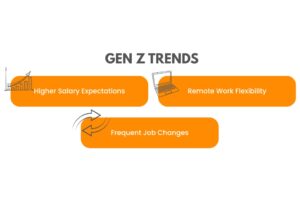
Remote Flexibility Isn’t a Perk, It’s an Expectation
Few industries value in-person mentorship, collaboration, and training as much as law. For decades, the profession was built on physical presence: shadowing senior attorneys, attending hearings, reviewing documents side-by-side, and absorbing institutional knowledge through proximity.
But Gen Z entered the workforce at a time when remote work had become normalized, and as a result, they expect:
- Hybrid schedules
- Location flexibility
- Increased autonomy over work hours
- Technology-enabled collaboration
Unfortunately, many firms still require consistent in-office presence; not as a control measure, but because in-person work is crucial for developing practical legal skills, strengthening client relationships, keeping documents confidential and maintaining a cohesive team environment.
This is especially true in litigation, transactional practices, and partner-track roles. Gen Z’s expectation for remote flexibility is creating friction, leaving firms unsure how to meet demand without compromising training quality.
With the current emphasis on remote work flexibility, Prime Legal encourages law firms to assess their current remote work policies. With an increasing desire for remote or hybrid work flexibility, law firms may need to come up with a policy that allows for flexibility if they want to attract young talent.
How These Trends Are Changing the Law Firm Workplace
Gen Z is not just asking for changes; they’re influencing firm culture, recruitment, and retention strategies across the industry. Their preferences are reshaping everything from leadership styles to workflow.
A Shift Toward Transparent Advancement Paths
Gen Z does not want ambiguous career progression. They look for clear promotion timelines, concrete billable expectations, defined compensation goals and visible paths to partnership or alternatives.
Firms that cannot articulate growth opportunities quickly see their youngest attorneys move elsewhere.
Better Technology and Streamlined Systems
Gen Z attorneys expect modern tools, mobile-friendly workflows, and digital interfaces. They are far less patient with outdated systems and manual processes.
This is pushing firms to invest in:
- Cloud-based document systems
- Case management platforms
- Automation tools
- Modernized training programs
Firms adopting these changes often find that productivity improves across all generations.
Greater Focus on Mental Health and Work-Life Balance
This generation is openly advocating for boundaries, wellness support, and healthier work environments. They value meaningful work but refuse to sacrifice mental health. This is a major shift away from the “grind culture” associated with traditional law practice.

The Challenge for Law Firms: Balancing Expectations with Reality
Gen Z is shaping the legal workforce in ways that cannot be ignored, but law firms must still operate within practical and financial constraints.
Firms Can’t Match Big Law Salaries… And Shouldn’t Try
Small to mid-sized firms, especially in markets like Richmond, cannot sustainably compete with top-tier compensation packages. Instead, they can differentiate by offering:
- Reasonable billable hour requirements
- Personal mentorship
- Strong culture
- Faster exposure to meaningful work
- Long-term advancement opportunities
These advantages, when they are clearly communicated, often matter more to Gen Z than firms realize.
In-Office Work Is Still Essential for Young Attorneys
While remote flexibility can be part of the equation, most firms cannot shift fully remote without sacrificing training quality and collaboration.
Gen Z attorneys may not initially understand the long-term value of office presence, but firms can bridge the gap by setting clear hybrid schedules, communicating why in-person work matters, structuring meaningful mentorship and providing flexibility within reason.
The key is balancing flexibility with the development of real legal proficiency.
Retention Starts with Realistic Expectations
Prime Legal often sees that early turnover stems from misaligned expectations.
Firms that proactively communicate expectations during recruitment (salary, hours, growth, flexibility, culture) tend to experience longer retention, better attorney satisfaction, stronger internal culture and more predictable business outcomes
The goal isn’t to lower Gen Z’s expectations; it’s to create alignment from day one.
How Prime Legal Helps Firms Navigate This Generational Shift
As a trusted legal recruiting partner based in Richmond, VA, Prime Legal understands the unique needs of both firms and candidates. We help clients along the East Coast:
- Attract early-career attorneys who align with firm culture
- Set realistic expectations around compensation and career growth
- Position themselves competitively without inflating salary structures
- Build retention strategies tailored to Gen Z behavior
- Navigate hybrid work expectations while preserving mentorship
- Reduce turnover by matching candidates to the right environments
Gen Z lawyers aren’t a challenge; they’re an opportunity to modernize the profession. Firms that adapt early will see the rewards in stronger teams, faster growth, and a more resilient workplace culture.
Final Thoughts
Gen Z lawyers are redefining how law firms operate, from hiring and retention to workplace expectations and compensation strategies. While their demands can feel disruptive, they also encourage long-overdue conversations around culture, technology, flexibility, and career development. Those who understand and adapt to this new generation will lead the future of legal talent.
Prime Legal is here to help you build that future. To learn more about our law firm recruiting strategies, get in touch with one of our recruiters and let us know how we can help!
