Blog - Personal Injury Lawyer | Career Guide | Salary, Skills, and Insights

Personal injury law attracts more interest than most litigation paths, and more misunderstandings. Many people picture courtroom theatrics or advertising-heavy firms. Fewer understand how case economics, client psychology, and risk tolerance shape the career from the first year onward.
This guide is written for people evaluating a personal injury lawyer career in the United States who want clarity, not inspiration. It explains what the role actually involves, how compensation works, where opportunities concentrate, and why some lawyers advance quickly while others stall.
What Is a Personal Injury Lawyer
A personal injury lawyer represents individuals harmed by negligence or misconduct. The work sits firmly in civil law. Auto accidents, slip and falls, medical malpractice, and defective products make up the bulk of caseloads.
Most personal injury lawyers represent plaintiffs. That single fact defines the career. Firms advance time and money with no guarantee of recovery. Lawyers are evaluated not only on legal analysis but on judgment about which cases deserve investment.
Litigation Is a Tool, Not the Default Outcome
Trials are rare. Negotiation dominates. Strong lawyers use litigation pressure strategically rather than reflexively. The ability to credibly prepare a case for trial matters more than how often a lawyer actually appears before a jury.
Core Duties and How Time Is Really Spent
Early Career Work Focuses on Case Evaluation
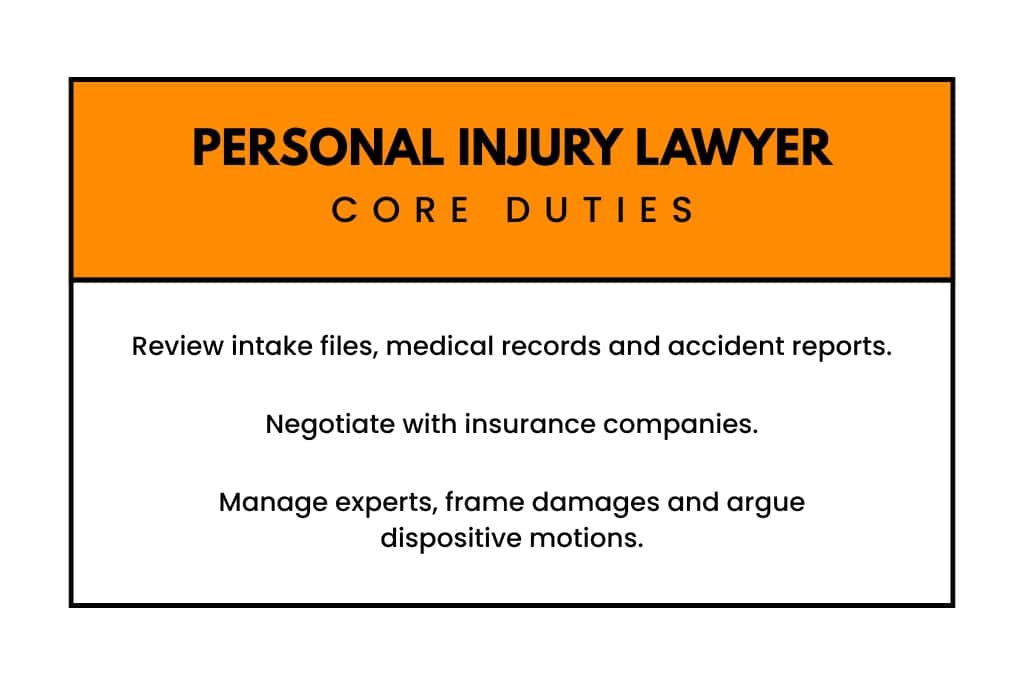
Junior lawyers spend much of their time reviewing intake files, medical records, and accident reports. The goal is not paperwork efficiency. It is learning how to predict outcomes before costs accumulate.
Firms quickly identify attorneys who can flag weak liability or insufficient coverage early. Those lawyers gain trust faster.
Negotiation Skills are Critical
Insurance carriers operate with standardized valuation models. Lawyers who understand those frameworks often close cases faster and with less friction.
Court filings support leverage, but persuasion usually happens long before trial calendars come into play.
Trial Readiness Shapes Internal Status
Even though few cases reach verdict, lawyers who can manage experts, frame damages, and argue dispositive motions gain disproportionate influence within firms. Trial readiness often determines who leads cases and who supports them.
Education and Licensing Expectations
Law School Pedigree Carries Limited Weight
Personal injury law does not require a specialized academic path. Firms value practical exposure over coursework branding. Torts, evidence, and civil procedures provide a foundation. Clinics and trial advocacy programs help but do not replace firm training.
Graduates from a wide range of schools enter the field successfully.
Bar Admission Determines Market Access
Lawyers must pass a state bar exam. Career mobility improves with admission in high-volume jurisdictions. Multi-state licensure becomes an asset later, especially for firms handling regional litigation.
Credentials That Influence Hiring and Advancement
Trial Recognition Signals Experience, Not Theory
Board certifications and trial-focused credentials matter because they indicate case volume and responsibility. Insurers and referral partners notice these signals.
Membership in plaintiff-side organizations such as the American Association for Justice often correlates with deeper litigation exposure rather than résumé padding.
Targeted Continuing Education Pays Off
Lawyers who invest in education tied to damages modeling, medical causation, or advanced negotiation tend to advance faster than peers who focus only on procedural compliance.
Personal Injury Lawyer Salary and Compensation
Median Salary Data Obscures Career Volatility
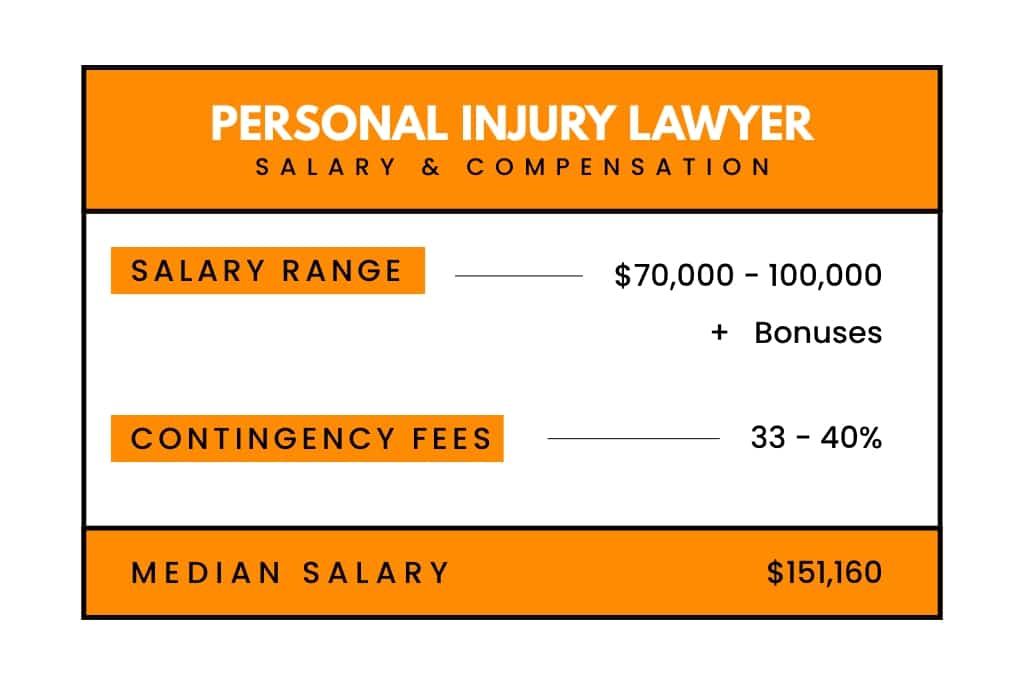
The U.S. Bureau of Labor Statistics reports a median annual wage of $151,160 for lawyers.
Personal injury lawyer salary ranges much wider than this figure suggests. Entry-level associates often earn between $70,000 and $100,000, sometimes with performance-based bonuses. Senior attorneys with established case pipelines can earn several times that amount.
Income volatility increases with seniority.
Contingency Fees Reshape Incentives
Most firms operate on contingency fees between 33-40%. Lawyers trade predictable income for upside tied to results. Cash flow depends on settlement timing rather than hours billed.
This structure rewards patience, financial discipline, and portfolio thinking more than raw productivity.
Skills That Change Career Trajectory
Medical Fluency Accelerates Trust and Outcomes
Lawyers who can interpret medical records and communicate effectively with treating physicians evaluate cases faster and negotiate from a stronger position. This skill often determines who leads high-value matters.
Client Communication Drives Referrals
Clients are often injured, frustrated, and unfamiliar with legal timelines. Clear, consistent communication reduces complaints and fuels referrals. Firms track this closely.
Financial Judgment Separates Leaders from Staff Attorneys
Every case represents a capital allocation decision. Lawyers who understand expected value, cost curves, and settlement timing influence firm strategy. Others remain execution focused.
Where Personal Injury Lawyer Jobs Concentrate
Large States Offer Volume and Competition
California, Texas, Florida, New York, and Illinois employ the highest numbers of lawyers overall, according to BLS occupational data.
These markets provide volume and specialization but also intense competition.
Secondary Markets Often Offer Faster Responsibility
Mid-sized and growing metros frequently allow younger lawyers to handle cases independently earlier. Cost of living advantages also stretch contingency income further.
How Lawyers Actually Break Into the Field
Many Start on the Defense Side
Insurance defense and general litigation roles provide exposure to valuation frameworks and litigation mechanics. Firms value candidates who already understand how cases are assessed from the other side.
Relationships Matter More Than Formal Recruiting
Personal injury hiring relies heavily on referrals, local reputation, and demonstrated reliability. Medical providers, former clients, and other attorneys drive opportunities more than on-campus recruiting.
How The Practice Is Changing
Data Is Now a Management Tool
Modern firms track case duration, settlement velocity, and return on investment. Lawyers who understand these metrics shape firm decisions, not just outcomes.
Advertising Costs Are Forcing Specialization
Rising marketing costs have increased the value of niche expertise and referral networks. Lawyers with language skills, industry familiarity, or community presence often outperform peers without them.
Is A Personal Injury Lawyer Career the Right Fit
Personal injury law rewards judgment, resilience, and comfort with uncertainty. It offers early responsibility and long-term earning potential, but little insulation from risk.
Firms like Prime Legal often advise candidates to focus less on prestige and more on exposure to real cases early. The path is demanding. For lawyers who commit, it remains one of the most economically durable legal careers in the United States.
